There’s a specific kind of ache that hits when you realize you can’t remember exactly how your dog tilted his head when he wanted something — that the memory has gone soft at the edges. Photos hold one angle. A custom pet figurine holds the whole animal: the weight of the body, the set of the ears, the curve of a tail that was always about to wag.
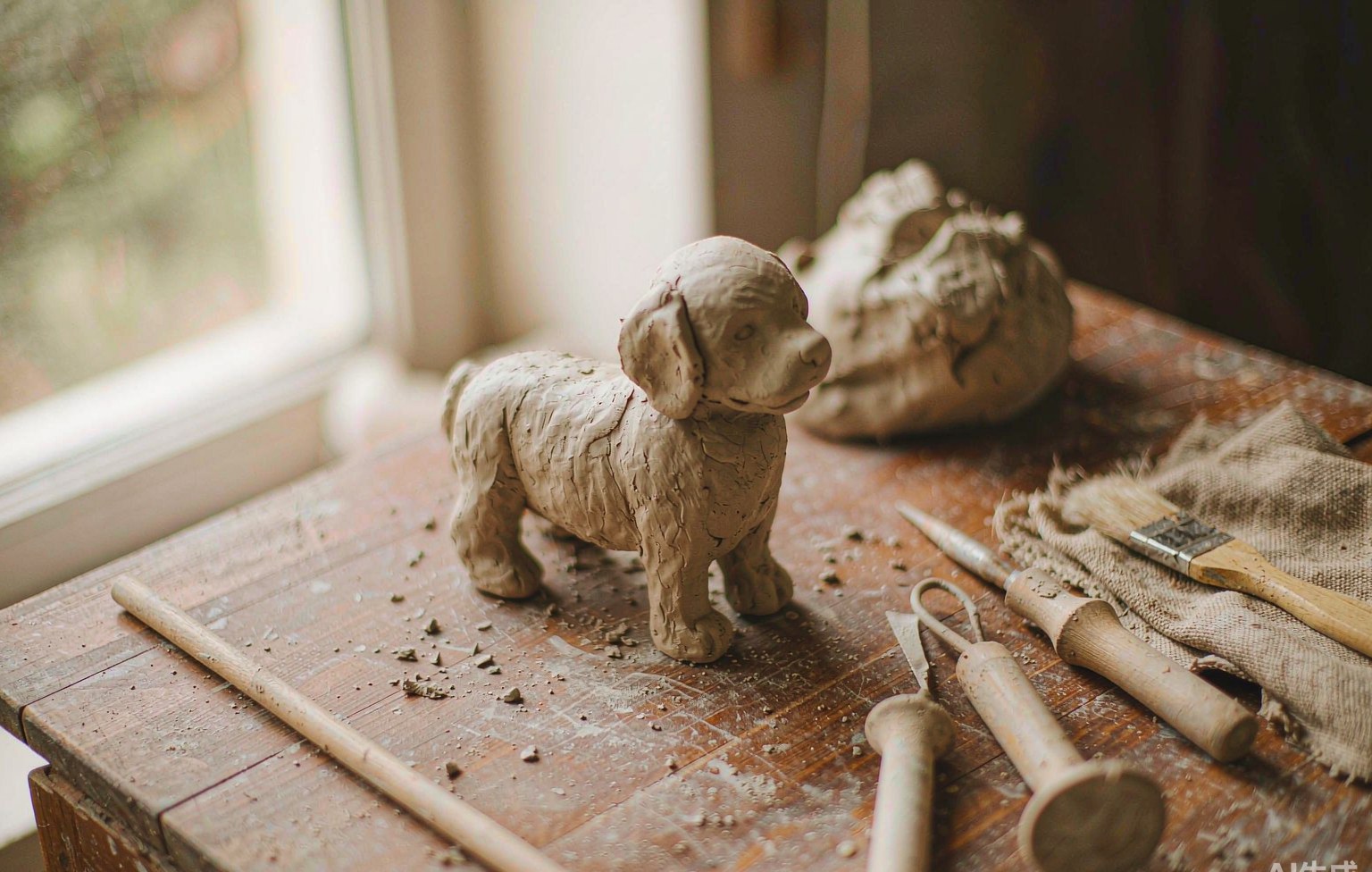
This guide walks through what a hand-sculpted pet figurine actually is, how a photo becomes clay step by step, which photographs sculpt well (most people send the wrong ones), how to compare figurines against urns, paintings and portraits, and what the real timeline looks like if you’re ordering for a birthday or a holiday.
Why a Figurine Hits Differently Than a Photo
Memorial keepsakes come in two families. There are the ones you look at — a framed portrait, a glass painting, a photograph in an urn compartment. And there are the ones you live with in three dimensions — something you walk past on a shelf, pick up when you’re thinking, turn slightly so the light catches the right angle.
A figurine belongs to the second family, and that changes how it works on you. Grief and memory researchers have long noted that physical objects help people hold on to a relationship by giving them a place to put the feeling. A flat image asks you to look; a sculpted form asks you to touch. Most owners describe the same small gesture: they reach for it without thinking, the way they used to rest a hand on a sleeping dog’s ribs to feel the breathing.
That’s the practical argument for a figurine over a print. It is also why the quality of the sculpture matters so much — a 3D keepsake that looks almost like your pet is worse than no keepsake at all. The uncanny near-miss reminds you of the loss instead of the animal.
What “Hand-Sculpted” Actually Means (and How to Spot the Difference)
The pet keepsake market has three tiers, and the price gap between them reflects real differences in labor rather than brand markup.
- Software-generated from a photo. An image is converted into a mesh and printed. Cheap and fast, but the output inherits the flatness of the original picture — a figurine with no back, fused legs, or a head that only reads correctly from the angle you photographed.
- Mass-produced breed models. A stock Golden Retriever statue with a name plate attached. Well-made, but generically correct and personally wrong: every owner knows within two seconds that this is a dog, not their dog.
- Hand-sculpted from your photographs. A sculptor studies several angles, builds the form in clay, and matches the individual details — the asymmetrical ear, the dusting of white on the muzzle, the way one hip sat lower after the surgery. This is the tier that produces something a family recognizes instantly.
Two quick questions separate the tiers in a sales conversation: Which photos do you need from me, and how many? (A sculptural process wants front, side and profile shots. A software process usually takes a single image.) And: Is the piece sculpted by hand or generated from software? A maker who sculpts will answer with the material and the process, not with marketing language.
Our own hand-sculpted clay pet figurine is made to order in the third tier — one artist, one animal, working from the photographs you send.
How a Photo Becomes a Clay Portrait: The Process, Step by Step
Buyers are usually surprised by how much of the work happens before any clay is touched. Here’s the real sequence.
1. Photo selection and study
The sculptor works out the anatomy from your photographs: shoulder height relative to the head, the length of the snout, where the coat parts, how the feet sit when standing. This is why more angles always beat higher resolution — a crisp photo of the same 45 degrees four times over tells the sculptor almost nothing about the back of the skull.
2. Building the armature and rough form
A supporting armature goes in first, then the mass of the body, then the pose. Well-proportioned poses almost always come from a photograph where the animal is standing or sitting naturally, not crouched in a candid leap.
3. Sculpting the details that make it individual
This is the slowest stage and the one that decides whether the finished piece reads as your pet. Muzzle shape, ear carriage, eye placement, the specific way fur bunches at the chest. For pets with distinctive markings — a blaze, a single white paw, a patch over one eye — this is also where those details are matched to your photos.
4. Drying, finishing and quality check
Clay has to dry and set before finishing. Because these pieces are made to order rather than pulled from stock, production typically runs about two to four weeks before the piece is ready to ship.
5. Shipping
Figurines are packed to survive a real journey, not an idealized one. Delivery inside the United States generally runs seven to fifteen days after completion, and orders over $99 ship free. If a piece arrives damaged, it is remade — which is the standard you should expect from anyone selling fragile handmade work.
How to Choose Photos That Sculpt Well
This is the single biggest lever you control over how closely the finished figurine resembles your pet. Bad inputs cap the ceiling no matter how good the sculptor is.
- Send five to eight photos minimum, from different angles. Front, both sides, a three-quarter view, and at least one standing shot for proportion.
- Prioritize daylight or even indoor lighting. Harsh on-camera flash flattens the muzzle and washes out coat markings — the exact features the sculptor needs.
- Include the whole body. A wall of close-up face shots leaves the sculptor guessing at leg length and stance, the two things that most often make a figurine feel “off.”
- Capture the signature detail. The crooked ear, the white chin, the scar on the flank. If it’s the thing you’d mention first when describing your pet, it belongs in the photos.
- Add a scale reference if you can. A photo beside a familiar object, or a note that your dog was 65 lb and stood 24 inches at the shoulder, keeps the finished size accurate. Figurines are scaled, not life-sized.
- Don’t over-edit. Filters that shift fur color or smooth detail actively hurt the result.
If you have video, mention it — a short clip can settle questions about gait and posture that still photos can’t.
Sizes, Formats and Poses: What You Can Actually Order
Most hand-sculpted pet pieces come in a small number of formats, and choosing among them is mostly about where the piece will live.
- A full-body figurine (commonly around 4–6 inches) shows the animal standing or sitting as a complete form. It’s the format that reads best from across a room and the one that carries the most information about the pet’s build.
- A head bust focuses entirely on the face and neck, which makes it the strongest option when you mostly have portrait-style photos, or when you want the expression — the tilt, the eyes — to be the whole point. See our clay pet head bust sculpture.
- A combined piece — figurine with an urn base, or the sculpture paired with an engraved tag — keeps two roles in one object if you also need a memorial vessel. If that’s your situation, it’s worth reading how to choose a pet memorial urn first so the size and material decisions line up.
On poses, the honest guidance is to choose the one you actually remember. Owners who order a sleeping pose because it looks peaceful sometimes find it harder to live with than the alert, ears-up stance the dog used at the door. When in doubt, choose the pose you saw most often.
Figurine vs. Urn vs. Painting vs. Portrait: A Straight Comparison
These categories overlap in buyers’ minds, so it’s worth separating them by what job each one does.
- Custom clay figurine — three-dimensional, tactile, catches the whole body and posture. Best for: a shelf or desk memorial, a gift for someone who still talks to their pet.
- Memorial urn — a vessel, not primarily a likeness. Best for: holding ashes, which no figurine can do. Pair it with a figurine if you want both.
- Glass painting or framed portrait — two-dimensional, image-led, easier to match to a much-loved photograph. Best for: wall display and for pets you mainly know through one great picture.
- Photo-based portrait art — the widest stylistic range, from realistic to illustrated. Best for: an artistic statement rather than a likeness study. Our custom pet portrait ideas guide covers the options in detail.
A common combination worth considering: ashes in a wooden keepsake urn, with the figurine beside it as the likeness. The urn does the ceremonial work; the sculpture does the everyday work.
Ordering Timeline: What to Plan For
Because hand-sculpted work is made to order, the calendar drives everything. A realistic working plan looks like this:
- 2–4 weeks production from the time your photos are confirmed.
- 7–15 days U.S. delivery after it ships.
- So: roughly 3–6 weeks end to end. Build in a buffer week for a date that matters — an anniversary, a birthday, a holiday.
If you’re ordering as a sympathy gift and the funeral or memorial is days away, a figurine is the wrong instrument. Order something that arrives fast now, and consider commissioning the sculpture for the one-month or one-year mark instead — many owners find the later gift lands harder anyway, precisely because everyone else has moved on. For same-week needs, see our guide to pet loss gifts.
Caring for a Clay Keepsake
Hand-sculpted pieces are durable but not indestructible. Keep them out of direct sun if the finish is painted, since prolonged UV will fade it. Dust with a soft dry brush rather than a damp cloth. Avoid handling by the ears, muzzle or tail — those are the thinnest points and the first to suffer from repeated stress. And if the piece is going to travel, pack it the way it arrived.
Some owners keep the figurine on a desk, others put it inside a glass cabinet to protect it from a curious new puppy. Both are fine; the point of the object is that it’s available, not that it’s preserved in a vault.
Common Questions About Custom Pet Figurines
Can you sculpt from old or low-quality photos?
Often yes, if there are several of them. Grainy photos still carry proportion and marking information. What limits a sculpture is missing angles, not low pixel counts — a blurry shot of the left side is worth more to a sculptor than ten sharp copies of the same frontal image.
Will the figurine look exactly like my pet?
It will look like a hand-made likeness, not a photo reproduction. Expect the individual proportions, markings and expression to match closely; expect clay to look like clay. Anyone promising photographic exactness in a sculpted object is overselling, and any artist who refuses to show you photos of previous commissioned work is worth avoiding.
Can you match a pet who has already passed away?
Yes — and it’s the most common reason people order. Since the whole process runs from photographs, the pet being gone changes nothing about the work, and there’s no need to explain or justify the timing.
Can I request a specific pose or add a collar, tag or toy?
Pose and small accessories are usually possible when they appear in your photos, and they should be discussed before the artist starts, since they change the structure of the piece.
How much does a custom pet figurine cost?
Hand-sculpted work sits above mass-produced statues and below life-size commissions, and pricing reflects size and detail. The honest way to judge value is cost per hour of sculpting plus the lifetime of the object — a $30 stock breed statue that never looks like your dog is the expensive purchase.
What if it arrives damaged?
It should be remade, and damaged-in-transit pieces are the seller’s problem, not yours. Confirm that policy before ordering, and photograph the box and the piece before you dispose of any packaging.
If You’re Ready to Start
Commissioning is simple: pick the format, send five to eight varied photos in natural light, tell the artist the detail that mattered most about your pet, and let them work. The piece that comes back will be the only object in your home that holds the whole animal at once — and the reason most owners say they’d do it again is not that it looks perfect, but that it looks like them.
Start with the hand-sculpted custom pet figurine, or browse the full keepsake range if you’re still deciding between a sculpture, an urn, or a painted portrait.