Of all the questions people ask when they are choosing a memorial urn, the one that causes the most anxiety is also the most practical one: what size do I actually need? Nobody wants to guess wrong on something this personal — and unlike most purchases, there are no do-overs once the ashes are placed.
The good news: urn sizing follows one simple rule, and once you know it, you can size an urn for any dog, cat, or keepsake in about ten seconds. This guide walks through the rule, a full breed-by-breed chart, and the few situations where you should size up.
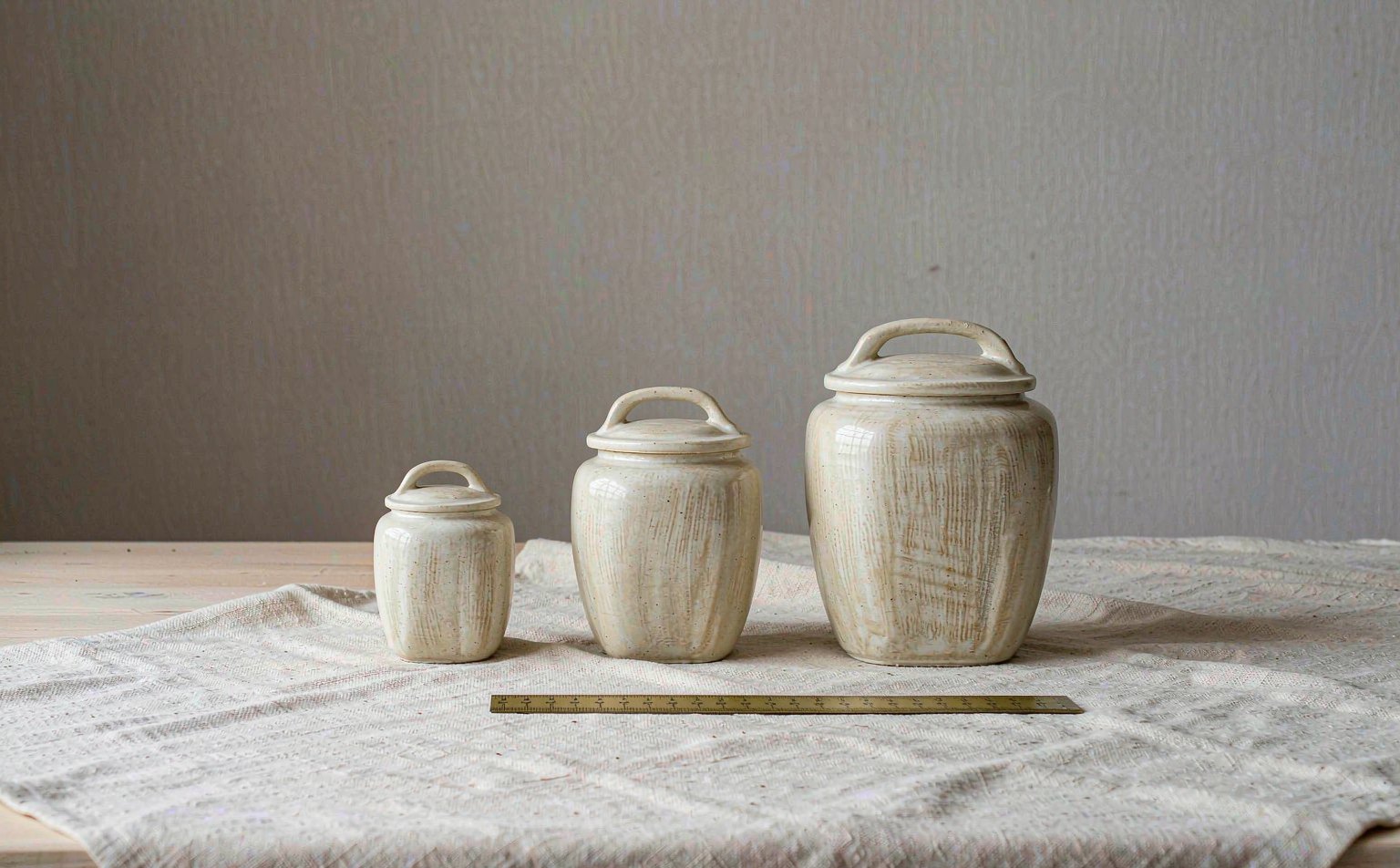
The one rule that matters: 1 cubic inch per pound
Here it is, the entire industry standard in one sentence: you need roughly 1 cubic inch of urn capacity for every pound your pet weighed when healthy.
A 60-pound dog needs an urn of about 60 cubic inches. A 10-pound cat needs about 10 cubic inches. That’s it. Cremated remains (called “cremains”) take up roughly the same volume as the animal’s healthy body weight, because bone mineral does not compress much during cremation.
If you only remember one thing from this guide, remember that ratio — it works for every species and every size.
Urn size chart by breed
Using the 1:1 rule, here is what the most common breeds translate to. Always use your pet’s healthy weight, not their weight at the end of an illness:
| Pet / Breed | Typical healthy weight | Urn size needed |
|---|---|---|
| Cat (most breeds) | 8–12 lb | 10–15 cu in |
| Chihuahua | 4–6 lb | 5–8 cu in |
| Yorkshire Terrier | 5–7 lb | 6–9 cu in |
| Shih Tzu / Maltese | 9–16 lb | 10–18 cu in |
| French Bulldog | 16–28 lb | 18–30 cu in |
| Beagle | 20–30 lb | 22–32 cu in |
| Cocker Spaniel | 20–30 lb | 22–32 cu in |
| Border Collie | 30–55 lb | 35–60 cu in |
| Labrador Retriever | 55–80 lb | 60–85 cu in |
| Golden Retriever | 55–75 lb | 60–80 cu in |
| German Shepherd | 50–90 lb | 55–95 cu in |
| Rottweiler | 75–135 lb | 80–140 cu in |
| Great Dane | 110–175 lb | 115–180 cu in |
Why you should always round up
If your dog weighed 62 pounds, do not hunt for a 62-cubic-inch urn. Choose the next size up. Three reasons:
- Ashes vary slightly. The 1:1 rule is a guide, not a guarantee — actual volume depends on the cremation process and can run a little above or below.
- You may want to place something inside. A collar, a tag, a lock of fur, or a handwritten note is common, and all of it takes space.
- Empty space is invisible; a tight fit is not. An urn that is too full cannot be sealed properly, and reopening it later is exactly as unpleasant as it sounds.
Skip the guesswork entirely: ask the crematorium
Here is the step most people never think of: your veterinarian or crematorium can tell you the exact volume of ashes before you order. It is a completely normal question — they answer it every day. If you already have your pet’s ashes at home, the container or certificate usually states the volume too.
If you are ordering the urn first, or the ashes will arrive before you have made up your mind, just follow the 1:1 rule and round up. It is reliable enough that virtually the entire industry designs around it.
Splitting ashes between family members
It is increasingly common for families to divide ashes — one portion stays in the main urn at home, and smaller portions go to a parent, a sibling, or a child who has moved away. If you plan to do this, you have two options: order one larger urn plus small keepsake urns for each person, or use one main urn and separate keepsake pieces. Both work; just make sure the main urn’s capacity covers the full volume if it is arriving before you split it.
Sharing ashes is also the standard solution for very large dogs — more on that below.
Honest capacities: what our urns hold
We would rather publish real numbers than marketing ones. Our two urns are sized like this:
- Ceramic Memorial Urn — Small (5 inch): about 20 cubic inches, suited to cats and small dogs. Large (7 inch): about 60 cubic inches, suited to medium dogs up to roughly 60 pounds. Both sizes have an airtight seal and optional base engraving.
- Custom Wooden Memorial Urn — engraved with your pet’s name and set with a photograph, made to order in about 2–4 weeks. If you tell us the weight of your pet when you order, we will confirm the right fit before engraving anything.
A note on very large dogs: if your dog was over about 60 pounds, a single 60-cubic-inch urn will not hold all of the ashes. Many families in this situation place a portion of the ashes in a keepsake-sized urn and scatter or bury the rest — there are many meaningful ways to do that. If you are unsure which route fits your situation, message us with your pet’s weight and we will tell you honestly whether what we make is the right fit. If it is not, we would rather say so.
Four things to check besides size
Capacity is the headline, but before you order any urn — ours or anyone’s — it is worth confirming:
- How it opens and seals. A threaded lid or a proper gasket seal matters far more than it sounds. The contents need to be protected from moisture and accidental spills.
- Where it will live. Measure the shelf, mantel, or bedside table first. A 7-inch urn sounds small until it is on a crowded bookshelf. Our guide to choosing a pet memorial urn covers placement in more depth.
- Engraving space. If you want a name, dates, or a short line, check the urn has a clean surface for it — and confirm how many characters are included in the price.
- Material and longevity. Glazed ceramic and finished hardwood hold up for decades indoors. Avoid untreated materials if the urn will sit in sunlight or a humid room.
Frequently asked questions
Do cat ashes take up less space than a dog’s?
They take up space in proportion to weight, not species. A 15-pound cat needs about 15 cubic inches; a 15-pound dog needs the same. Cats simply usually weigh less.
What if my pet was overweight or very ill at the end?
Size the urn to their healthy weight. That is the standard the industry uses, and it reflects the bone structure that actually determines ash volume.
Can I use the urn before the ashes arrive?
Yes — most people order the urn ahead of time, and every urn in our shop ships ready to receive ashes whenever you are.
Is it strange to keep ashes at home?
No — it is the most common choice by far. A keepsake on a shelf is quiet, private, and entirely yours. If you would rather not keep them, there are respectful alternatives, from scattering to memorial gardens.
How do I transfer ashes into the urn?
The ashes usually arrive in a sealed plastic bag inside a temporary box or velvet pouch. Simply place the bag inside the urn and close it — no pouring needed, and nothing is exposed. If you prefer to transfer directly, do it over a clean, dry surface and take your time.
Ready to choose? Browse the full range in our memorial urn collection, or see the ceramic urn in both sizes and the engraved wooden urn in detail.
A note from our studio
We are a small studio, and everything here is made to order — from a hand-sculpted clay portrait to a printed keepsake that carries a single photograph. Nothing on this site is stock waiting in a warehouse. That is why a piece takes two to four weeks instead of two days.
It also means we are the ones who open the emails. If you write to us about a pet you lost, you are not reaching a support queue — you are reaching the people who will be holding the work in their hands.
And if you have a story you would like to tell, whether or not you ever order anything, there is a place for it here: Share your story. We read every one ourselves, and nothing is published without your permission.
If you are reading this in the first hard weeks: we are sorry. Take the time you need.
— Fingking Studio