It is the first practical decision after the hardest one, and it arrives when you are least equipped to make it: what do we do with our pet now? For most families the choice comes down to two paths — cremation or burial — and almost nobody has thought about it beforehand. This guide compares both honestly: what each actually involves, what it costs in general terms, what the law expects, and which factors should actually drive your decision. There is no wrong answer here. There is only the answer that fits your family, your home, and the goodbye you need to have.
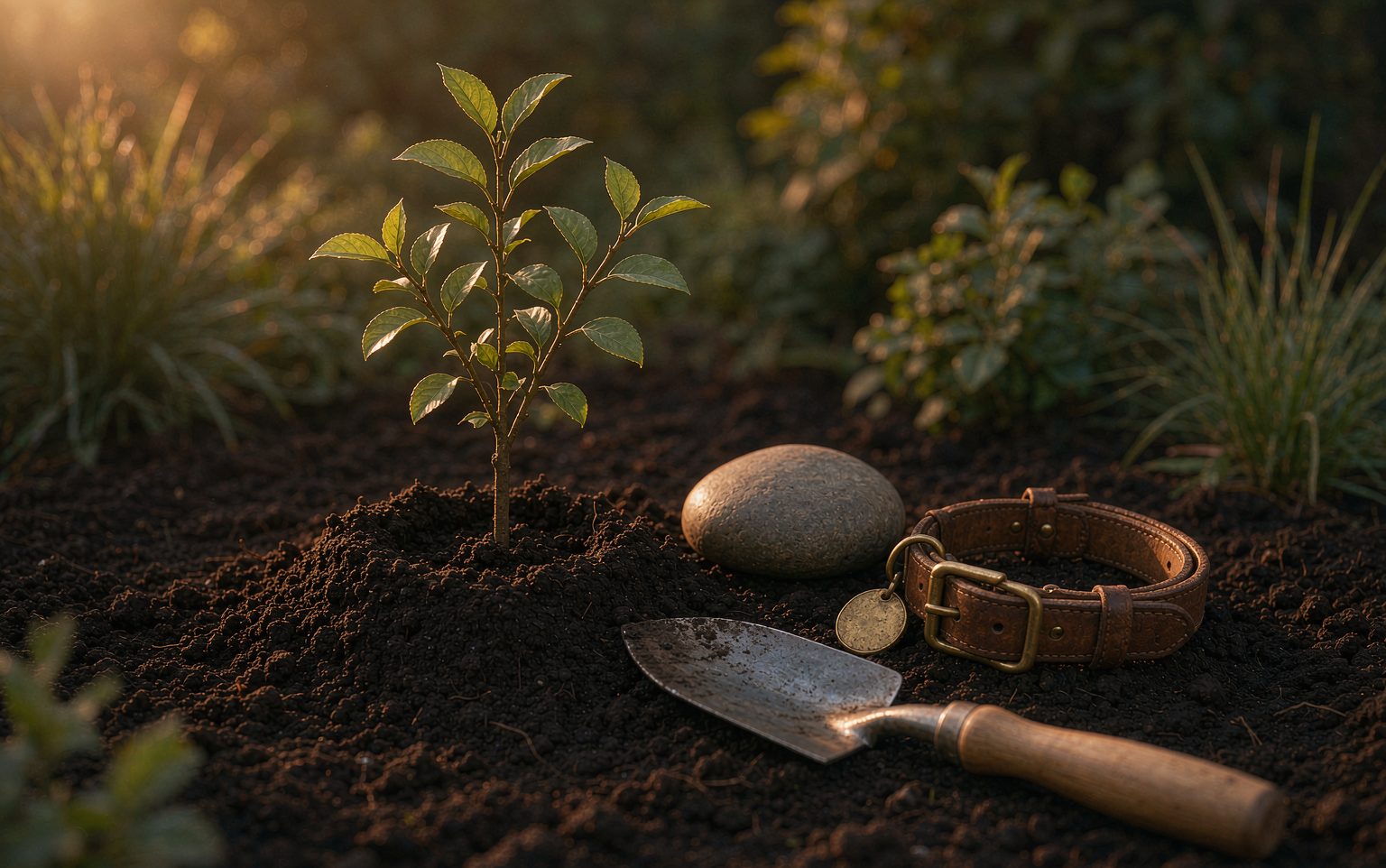
First: there is no wrong choice
Before the comparison, release the pressure. Families sometimes agonize over this decision as if it were a test of how much they loved their pet. It is not. Cremation and burial are simply two different ways of keeping someone — one keeps them portable and divisible, the other keeps them rooted in a place. Millions of loving families choose each path every year, and the pet does not know the difference. What your pet knew, fully, was the life you gave them before this decision. Whatever you choose now is a gift to yourself and your family, not a final grade.
Cremation: what it actually involves
Cremation is the most common choice in the United States, largely because it is simple to arrange: most veterinary clinics work with a crematory and can handle everything from the clinic itself. But “cremation” is really three different services, and knowing the difference matters:
- Communal (group) cremation. Several pets are cremated together and the ashes are not returned. This is the simplest and least expensive option. Some crematories scatter the ashes in a dedicated memorial garden or meadow.
- Individual (private) cremation. Your pet is cremated alone and the ashes returned to you, usually in a simple urn or a decorative one you choose. Crematories use tracking systems — metal ID tags accompany the pet through the process — so you can ask the clinic how identity is guaranteed.
- Witnessed cremation. You (or your family) are present at the crematory when the cremation begins. It costs more and not every facility offers it, but for some families it provides the closure of being there until the very end.
Cost, honestly stated: prices vary widely by region, pet size, and the clinic’s arrangement, but as a general pattern, communal cremation often starts in the range of what you might spend on a nice dinner out, while individual cremation commonly runs from around a hundred dollars for a small cat to several hundred for a large dog. If cost is tight, say so plainly at the vet’s office — this is a common conversation, clinics have seen it all, and communal cremation is a dignified choice, not a lesser one.
What you get back: ashes, typically in a temporary container, usually within one to two weeks. From there you keep, scatter, or divide them — our guide to meaningful things you can do with your pet’s ashes covers the options in depth, and our urn choosing guide covers containers if you are keeping them.
Burial: what it actually involves
Burial comes in two forms, and they are very different arrangements:
- Home burial. Burying your pet in your own garden — under the tree they always napped beneath, by the fence they patrolled. It is intimate, free, and gives you a physical place to visit. But it has rules: many cities and counties allow home burial on private property, while others restrict the depth, the location relative to water sources, or prohibit it entirely. Check your local ordinance before you dig — a quick call to your city office or a search of its website settles it in minutes. Practically, you will want a spot away from utilities and tree roots, at least three to four feet of soil over the grave, and a wrapping that is biodegradable (a blanket, a wicker casket). Our guide to when a pet dies at home walks through the immediate steps that come before this one.
- Pet cemetery burial. A plot in a dedicated pet cemetery, often with a headstone, perpetual care, and visitation rights — the closest equivalent to human arrangements. It is the most expensive option, typically involving plot purchase, interment fees, and ongoing care charges, but it solves the two problems home burial cannot: permanence if you might move, and legality anywhere.
The honest comparison
Here is how the two paths actually stack up against the questions families ask:
| Cremation | Burial (home) | Burial (cemetery) | |
|---|---|---|---|
| Relative cost | $–$$ (communal to individual) | Free (after supplies) | $$$ (highest) |
| Keepsake remains | Yes — ashes you can keep, scatter, or divide | No — the grave is the keepsake | No — the plot is the keepsake |
| A place to visit | Only if ashes are kept or scattered somewhere meaningful | Yes — your garden, always | Yes — dedicated grounds |
| Survives a move | Yes — ashes travel with you | No — remains belong to the property | Yes — perpetual care contract |
| Legal complexity | None for you — the clinic handles it | Varies by city — verify first | None — handled by the cemetery |
| Time pressure | Low — clinic holds the pet until you decide | High — burial happens within a day or two | Moderate — scheduled with the cemetery |
One quiet note on the time pressure row: this matters more than families expect. Grief makes decisions hard, and home burial forces all of them within about 48 hours. Cremation, even communal, buys you weeks. If your family is still in shock, cremation with a decision about ashes later is a completely legitimate way to give yourselves time.
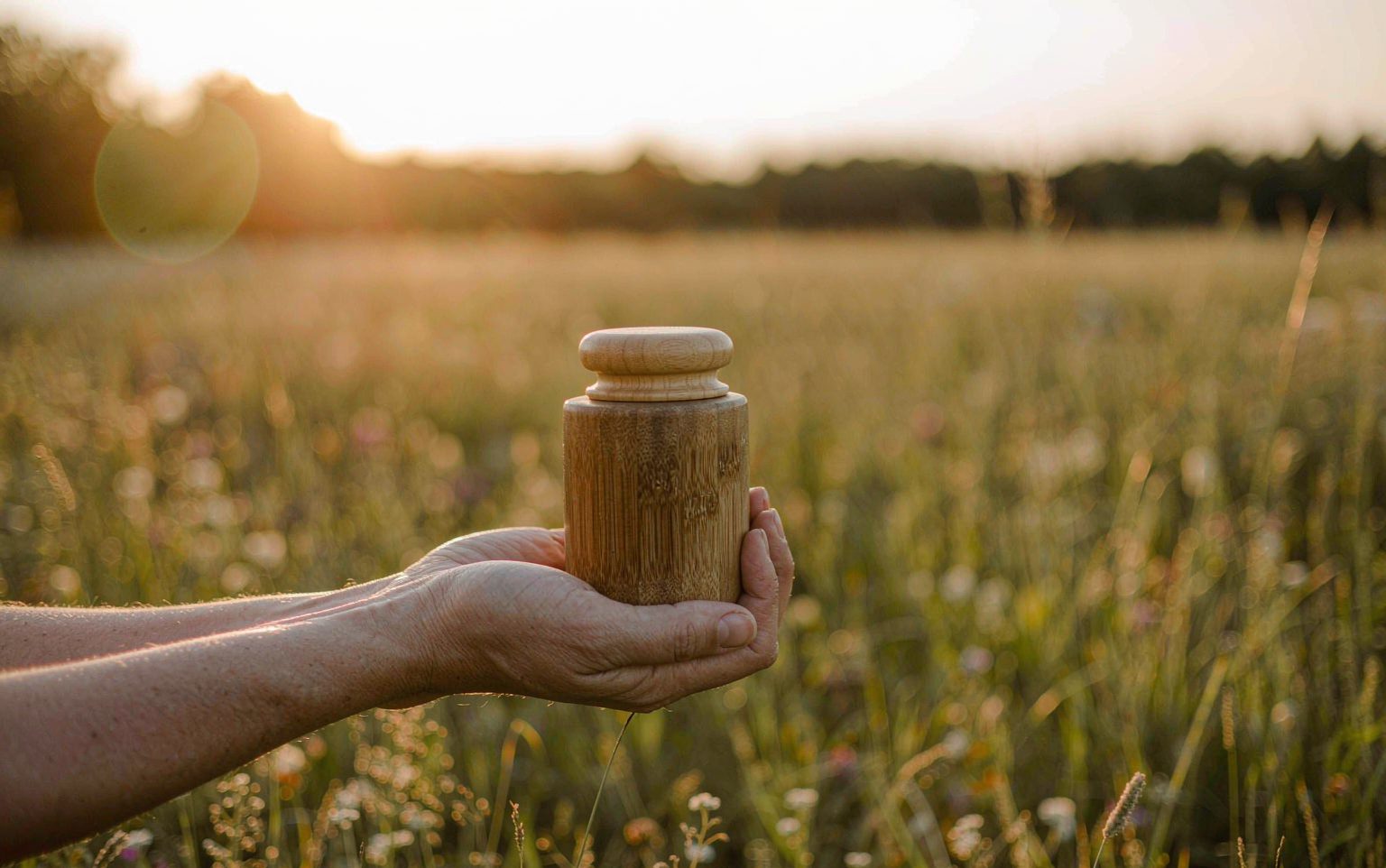
The five questions that actually decide it
Instead of weighing everything, ask your family these five. Most people know their answer by question three:
1. Are you likely to move in the next several years? If yes, home burial starts to feel wrong the day the moving truck arrives — your pet stays with the house. Cremation or a cemetery plot travels (or endures) better.
2. Does your family need a physical place to visit? Some grievers need a grave to tend; others find graves sad and prefer a shelf at home. You know which one you are. If it is the shelf, that points to cremation with ashes kept, or ashes kept small and the rest scattered.
3. Do several people want a piece of the goodbye? Divorced parents, grown children in other cities, a partner who travels — ashes can be divided into keepsakes for each person. Burial cannot be shared. Our guide to personalized pet memorial gifts shows what families commonly make when dividing remains.
4. What does your property and your city allow? Renters, condo owners, and residents of municipalities that restrict home burial should check before promising the kids a garden grave. If home burial is off the table and cost matters, communal cremation plus a garden memorial — a stone, a plant, no remains — is a gentle substitute.
5. What would your pet have cared about? Honestly, nothing — but the ritual is for the living, and it should feel like them. A water-loving dog honored with ashes scattered at the lake reads truer than a formal plot. A house cat who never left the living room might belong exactly there, on the windowsill, in an urn, forever.
You can do both (many families do)
The choice is not exclusive. A common and quietly sensible pattern: individual cremation, then divide — some ashes buried or scattered in the garden under a tree, a portion kept in an urn, a small amount worked into keepsakes for family members. The garden gives you a place to visit; the urn gives you something that cannot be taken by a future move; the keepsakes give everyone their own piece. If you go this route, our piece on paw print keepsakes covers the non-ash options too, like clay impressions you can make at any point — before or after either goodbye.
And whichever path you choose, a physical keepsake does not have to contain remains at all. Many of our customers mark the spot — grave, garden, or shelf — with a custom clay figurine sculpted from photos, because the thing that most needs keeping was never the ashes: it was the face, the posture, the way they sat by the door. A figurine works identically over a grave or beside an urn.
What most families choose — and why it is fine to be typical
Individual cremation with ashes returned is the most common arrangement in the U.S. today, followed by communal cremation, with home burial a strong third in rural and suburban areas and cemetery burial the least common. If you are reading this article the day after your pet died and you just need permission to take the standard path: that is fine. Take the standard path. The memorials that matter — the rituals, the keepsakes, the stories told at dinner for years afterward — come after this decision, not inside it.
Frequently asked questions
Is it legal to bury my pet in my backyard?
Often yes, but it depends entirely on your local rules — many municipalities permit home burial on private property with depth and location requirements, while some prohibit it. Search your city or county website for “pet burial ordinance” or call the city office. Renters should also check the lease. When in doubt, communal cremation with a memorial stone in the garden achieves the same emotional result with no legal questions.
How do I know the ashes I receive are really my pet’s?
Reputable crematories use a tracking system — typically a numbered metal disc that stays with your pet through intake, cremation, and return. Ask your vet or the crematory directly how they guarantee identity; established operations answer this easily and in detail. Vague or evasive answers are the warning sign.
How soon after death does cremation or burial need to happen?
If the pet is with a veterinary clinic, they can refrigerate the body, which typically gives you several days to a week to decide without pressure. Home burial, by contrast, should happen within a day or two of death. This timing difference is one of the most practical reasons families choose cremation first and plan the goodbye later.
Can I bury my pet’s ashes in the garden instead of the body?
Yes — and it sidesteps most home burial regulations, since cremated ashes are inert. Many families bury a small portion of ashes beneath a tree or plant a memorial shrub over them. Check nothing; just dig with care, choose a spot away from later construction, and mark it with something that will last. Our pet memorial garden ideas guide has design approaches for exactly this.
What if I cannot afford any of these options?
Say so at the veterinary clinic — plainly and without embarrassment. Clinics encounter this daily, and many have relationships with low-cost crematory services or humane societies that assist. Communal cremation is inexpensive or sometimes provided at reduced cost, and a home memorial with no remains at all — a stone, a planted tree, a framed photo — is a complete and honorable goodbye. Love paid the bills for years; this last step does not need to.
If the goodbye itself is still ahead of you, our guides to planning a pet memorial service and what to do when a pet dies at home walk you through the days around this decision, step by step.
A note from our studio
We are a small studio, and everything here is made to order — from a hand-sculpted clay portrait to a printed keepsake that carries a single photograph. Nothing on this site is stock waiting in a warehouse. That is why a piece takes two to four weeks instead of two days.
It also means we are the ones who open the emails. If you write to us about a pet you lost, you are not reaching a support queue — you are reaching the people who will be holding the work in their hands.
And if you have a story you would like to tell, whether or not you ever order anything, there is a place for it here: Share your story. We read every one ourselves, and nothing is published without your permission.
If you are reading this in the first hard weeks: we are sorry. Take the time you need.
— Fingking Studio