The house is quiet in a way it has never been quiet before. The food bowl is washed and put away. And somewhere in the back of your mind, a thought starts to form: we should do something. Something official. Something that marks that this actually happened.
That instinct — to gather, to mark, to say things out loud — is one of the oldest things humans do. And it doesn’t switch off when the one who died was a dog, a cat, or a rabbit who spent fourteen years in the same kitchen. A memorial service for a pet is not an indulgence and it is not strange. It is what people have always done when someone they love is gone: they gather, they remember, and they begin.
This guide walks you through planning one that feels real — not performative, not expensive, and not borrowed from someone else’s idea of what grief should look like. A simple structure you can follow, honest options for every budget, what to do about children, what to do if nobody else comes, and what to do with the ashes if you’re not ready to decide yet. No scripts you have to follow, and no ceremony police.
In this guide
Do You Actually Need a Ceremony?
Let’s clear the first hurdle honestly: no, you don’t need one. Plenty of people grieve fully and healthily without ever holding a formal goodbye. Some mark the loss alone on a walk. Some can’t speak about it for months. If the thought of organizing anything makes the grief heavier instead of more bearable, that is a complete answer.
But for many people, a ceremony does something the rest of grief can’t: it gives sorrow a container. Grief without structure tends to leak everywhere — into the workday, into sleep, into the moment you find the old tennis ball under the couch. A ceremony takes an hour of that diffuse pain and puts a frame around it. You speak. Someone else speaks. Something physical happens — a candle, a stone, a handful of soil — and afterwards, the loss has a shape. Psychologists who study bereavement describe rituals like this as one of the most reliable ways mourners move from shock toward acceptance, and you don’t need a study to recognize the logic: every culture on earth invented them, independently, for a reason.
So the honest framing is this: a ceremony is not a requirement, it’s a tool. If it’s the right tool for you, the rest of this guide is the blueprint.
Where to Hold It
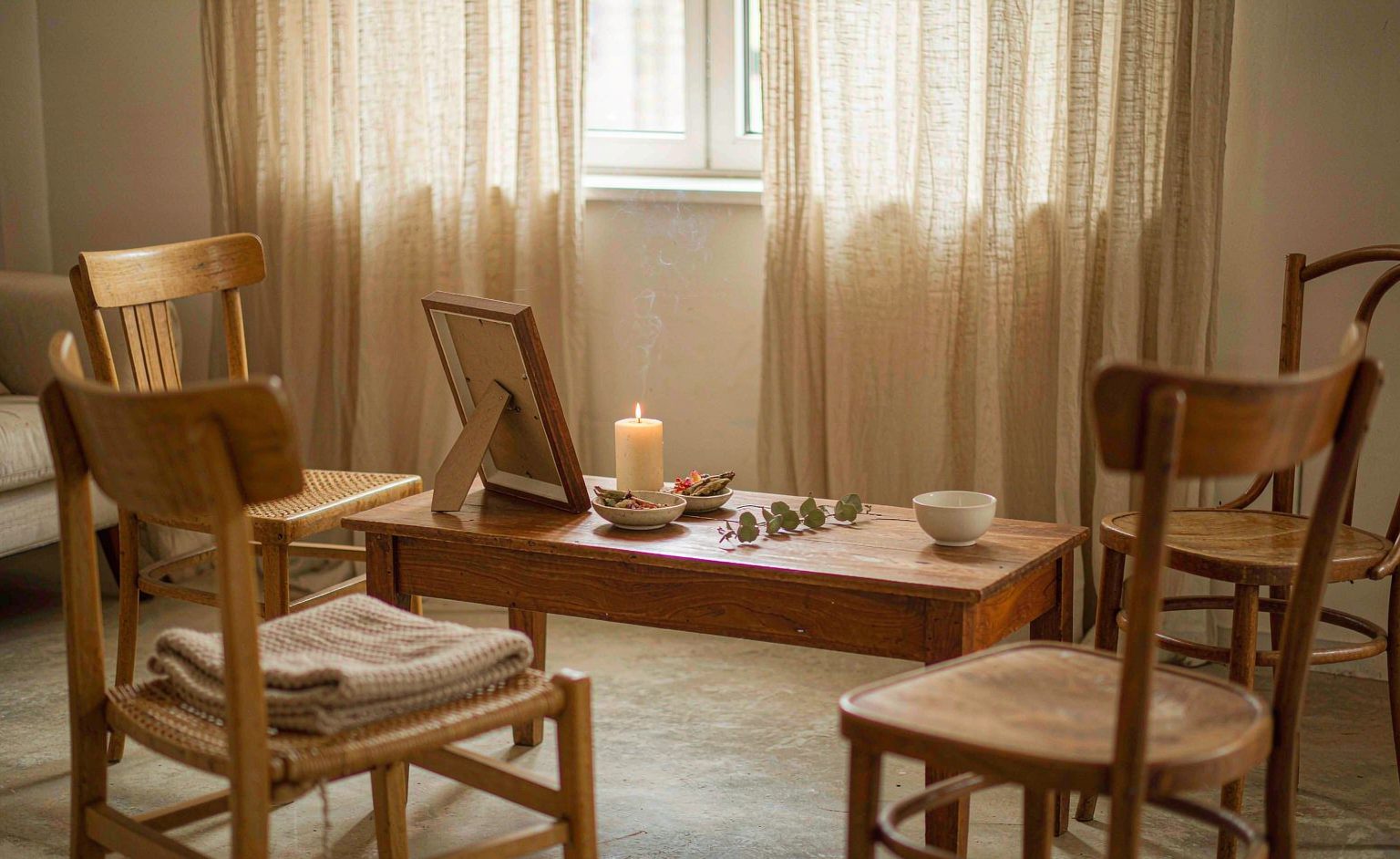
There is no correct venue. There is only the place that fits the animal and the people who loved them.
- At home. The most common choice, and often the most honest one. The living room where the cat monopolized the armchair, or the backyard where the dog patrolled the fence line, already means something. Nothing needs to be decorated or transformed — the place does that work itself.
- A place they loved. The trail with the good sniffs. The lake. The patch of sun on the apartment balcony. Nature doesn’t require a reservation, and for many people this is where the words come easiest. If it’s public space, pick a quiet hour; you will not want an audience of joggers.
- The garden. If you’re planting something as part of the tribute — a tree, a shrub, a bed of their favorite smelling things — the ceremony and the planting can be the same act. Our guide to pet memorial garden ideas covers the planting side in depth.
- A cremation garden or pet cemetery. If your pet is (or will be) interred somewhere specific, many such places welcome small services. Call ahead; policies vary widely.
One practical note: whatever location you choose, check it in advance at roughly the hour you plan to gather. Where does the sun land? Is there somewhere to sit? Where would a small table go? Ten minutes of scouting prevents the kind of logistics-fumbling that punctures a moment.
A Simple Structure That Works
You do not need an officiant, an order of service, or a talent for public speaking. Almost every meaningful pet memorial — whatever its setting or budget — has some version of the same four movements:
1. Gathering. Everyone arrives and settles. This sounds trivial, but don’t skip its gravity: the act of sitting down together in a chosen spot on purpose is itself the beginning of the ritual. Some people light a candle at this point to mark that the ceremony has started. Others simply wait for the room to quiet.
2. Words. Someone — often the person whose pet it was — speaks about the animal. Not a eulogy in the formal sense. The most affecting versions are specific and small: the morning routine, the way they demanded the good chair, the thing they were inexplicably afraid of, the night they comforted you when no human knew how. If other people are present, invite anyone who wants to say something to do so — and make it explicitly optional. Some guests grieve animals deeply but silently, and a forced turn speaking will not help them.
3. A physical act. This is the heart of the ceremony, and the part people most often underrate. Words are how we understand a loss; a physical act is how the body registers it. Light the candle, place the stone, pour the soil, plant the tree, tie the ribbon, read the letter, scatter the ashes. Section below has a full menu of these — every one costs little or nothing.
4. Closing. A deliberate end, so the gathering doesn’t just evaporate. The candle is blown out. Everyone takes a stone home. A song plays once, fully. One sentence: “We’re ready now.” Whatever closes it, close it on purpose — it gives everyone permission to return to ordinary life, which is exactly where the living belong.
Twenty minutes covers all four movements comfortably. An hour is generous. Beyond that, grief gets tired and ceremonies get long.
Things to Actually Do During It
The physical act is the piece people plan least and remember most. Here is the honest menu — no budget required for any of them:
- Candle. One candle, lit at the start, extinguished at the close. The single most universal memorial gesture, and it needs nothing but a candle.
- Stones. Each guest holds a small stone through the ceremony, then keeps it or adds it to a pile. Weight, texture, permanence — it gives restless hands something to do and gives everyone a small physical anchor afterwards.
- Letters. Write your pet a letter and read it aloud, or leave it unburned and unread but present. For children, drawing a picture serves the same purpose and often works better than words.
- The collar or tag. Bringing the collar, tag, or a favorite toy and placing it on the table at the center of the gathering. It is the simplest possible way of making an absence visible.
- Planting. A tree, shrub, rose bush, or even a single pot of their favorite-smelling herbs. It converts grief into something that grows on a schedule, and it gives you a place to go on hard days later. Garden memorial ideas are covered in their own guide.
- Music. One song that belonged to them — whatever you hummed at them, whatever was playing during a specific memory. Played once, all the way through, at the close.
- Sharing food they loved. Not the chocolate. But a dog who lived for carrots or a cat who fought for scraps of chicken can be honored with exactly that, shared among the humans who loved them. It sounds whimsical. It works.
- Reading. A poem, a passage, or a line you’ve chosen. If you want language but not your own, our collection of pet memorial quotes has material for exactly this moment.
- Ashes. If the ashes are present and you are ready, the ceremony can include their placement — into a garden bed, a scattering, or a permanent urn. If you are not ready, that is completely fine, and the section below is for you.
A note on scattering ashes, because people worry: rules genuinely vary by location — many public parks and beaches restrict or prohibit it, while private land needs the owner’s permission. Check before you plan a ceremony around scattering, or keep the ashes and choose a different physical act. What to do with pet ashes covers the full range of honest options.
Keepsakes at a Memorial Gathering
Nothing in a ceremony needs to be bought. That said, for many people a small physical token — something that exists after the candles are cold — is what makes the goodbye hold. If you want a keepsake at the center of the gathering, or something for guests to carry home, here is what we make, honestly presented:
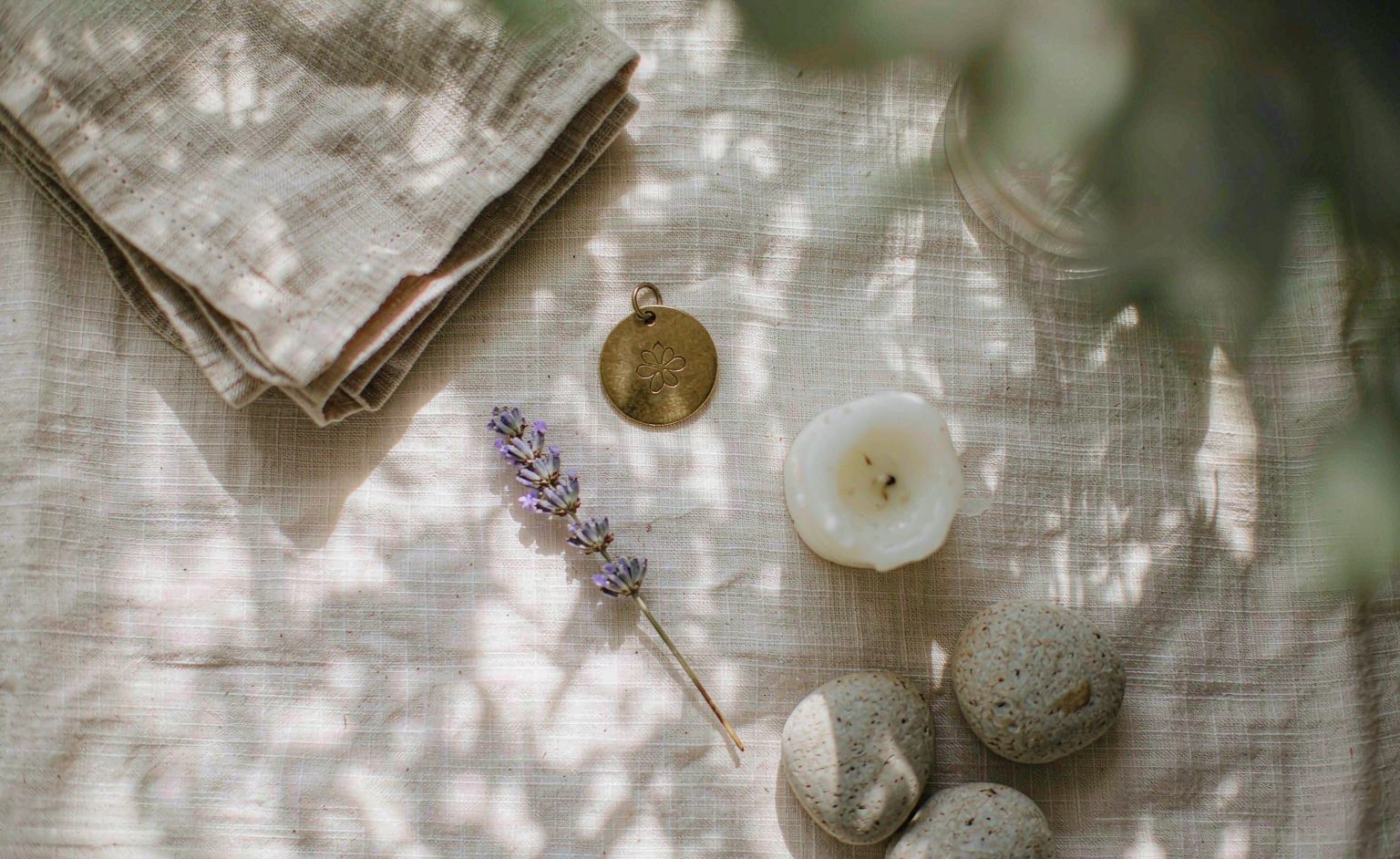
- A portrait at the center. A hand-painted glass portrait from your photographs placed at the center of the table gives everyone something to look at and talk about — it does the work a framed photo does, but it’s made by hand from the specific pictures you choose. Sculptural versions — the clay figurine — do the same thing in three dimensions.
- Somewhere for the ashes to rest. If the ceremony marks an interment rather than a scattering, a wooden keepsake urn gives the ashes a permanent place in the home, and the choosing of it can be part of the ceremony itself.
- Something small for each guest. Guests at a pet memorial often ask, a little awkwardly, if there’s anything they can do or keep. A brass tag with their paw print or a small keychain made from a photo of them answers the question: yes — remember them with you.
We make these from photographs you send, and they are made by hand, which means they take time — if you want one to be present at the ceremony, order it early. If the ceremony is already behind you and you’re only now ready for a keepsake, that timeline is just as valid; there is no deadline.
Including Children
Children handle pet funerals better than adults expect, and worse than adults hope. The honest guidance:
- Invite, don’t assign. Ask if they want to come. Most do. A child excluded from the goodbye often invents worse explanations than the truth.
- Give them a job, not a speech. Placing the stone, holding the candle, putting flowers on the table, drawing a picture to read or show. A task keeps a wobbly child steady better than an expectation to perform.
- Let them see you cry. The single most valuable thing a grieving child can witness is an adult being sad and surviving it. It teaches the actual lesson: sadness is survivable, and it’s allowed to be shown.
- Answer the real question. Under most child questions about death is the same anxious one — am I going to lose everyone I love? Answer the literal question simply and honestly, and then answer the hidden one: yes, everything alive dies eventually, and no, you will not be left alone.
Our full guide on helping a child cope with the loss of a pet covers the days and weeks after, not just the ceremony itself.
If Only You Will Be There
Almost nobody writes about this version, so we will: a lot of people plan these ceremonies knowing the guest list is one person. Maybe nobody else in the house is ready. Maybe the pet was yours alone. Maybe you simply don’t want anyone to see you do it.
A ceremony for an audience of one is not a diminished version. The structure doesn’t change — words, a physical act, a close — it just gets quieter. You can say the things out loud that you’d want a room to hear. You can read the letter. You can light the candle and let it burn down on its own. Some people find this version easier than a crowd; some find it harder; both are normal.
And if even that feels like too much on the day — if you set everything up and then can’t do it — pack it away without judgment and try another day. The ceremony serves you. It does not have a schedule you’re failing to keep.
What if the Ashes Aren’t Ready?
Two common situations, both completely normal:
The ashes haven’t come back from the crematory yet. Cremation services commonly take one to two weeks, and nobody should wait to say goodbye. Hold the ceremony without the ashes — the collar, a photograph, or a written memory serve the same purpose at the center of the gathering. The ashes can be placed later, privately, in their own small moment. Many families do exactly this, in that order, and it works.
You’re not ready to decide what to do with the ashes at all. Then don’t. There is no rule that the ceremony must resolve the ashes, and no clock on the decision. If the urn is on a shelf for a year while you figure it out, the urn does not mind. Our honest guide to what to do with pet ashes exists precisely for the version of you who needs options months from now, not today.
The same patience applies to keepsakes: what to do with your pet’s belongings is a decision people often make weeks apart, and all of those decisions can wait until they make themselves.
Frequently Asked Questions
Is it strange to hold a funeral for a pet?
No. Humans have buried and commemorated animals for thousands of years — archaeologists have found deliberately interred pets going back to antiquity. What’s actually strange is expecting a creature who shared your home for a decade or two to leave no mark at all. The ceremony isn’t the strange part.
How long should a pet memorial ceremony be?
Twenty minutes is genuinely enough. If you have readings, planting, or several speakers, up to an hour. Longer than that, and you’re managing fatigue rather than honoring anyone. Short and sincere beats long and dutiful every time.
What do you say at a pet memorial?
Specifics beat eloquence. The morning routine. The terrible habit that made you laugh. The night they knew before you did. If you want borrowed language, a line from our pet memorial quotes collection works well, but the sentences only you could say are the ones people will remember.
Who should I invite?
Whoever actually loved the animal — and only them. A pet memorial is one event where the guest list can be ruthlessly honest. Coworkers who never met the dog do not need to attend, and nobody who found your bond “just a dog” should be anywhere near the front row. Household members, close friends, the kids, the neighbor the dog adored: that’s a complete list.
Do you send invitations for a pet memorial?
For a small home gathering, a simple message — text, email, or a call — is entirely appropriate and expected. There is no etiquette requirement for formal invitations, though nothing stops you from making one if that’s meaningful to you. If guests ask what to bring: the honest answer is “just yourself,” or, if they offer, a flower or a small stone for the table.
What if I want a ceremony but nobody understands?
This is more common than it should be, and it’s one version of what grief researchers call disenfranchised grief — mourning that society treats as less legitimate. The counter is simple: you do not need anyone’s permission to honor your own animal. Hold it alone, or invite the one person who does understand. One witness changes everything, and you only need one.
Can we hold a ceremony before the euthanasia appointment?
Yes, and for many families this is the most meaningful timing of all — a “living farewell” where the pet is still present, still taking treats, still part of the room. Keep it short and calm, let them move freely, and don’t stage anything that requires them to perform. Our guides on quality-of-life decisions and what to do when a pet dies at home cover the surrounding logistics honestly.
What do you do after the ceremony?
Nothing formal. Most gatherings naturally end in conversation, food, or simply drifting back into the day. Some families follow it with a walk to a place the pet loved. The ceremony closes the goodbye; the living carry on, which is the point.
A Goodbye Is a Beginning
Here is what nobody tells you before the first one: the ceremony is not the hard part. The hard part is the ordinary Tuesday three weeks later, when the leash by the door and the food bowl in the cupboard and the silence at six o’clock ambush you one at a time. The ceremony doesn’t prevent any of that. What it does is give you an hour, early on, where the grief was allowed — spoken, witnessed, given a shape — and that hour keeps. People return to it. It becomes a fixed point: we said it properly, once, out loud.
Plan it small or plan it full. Do it with a room of people or with nobody but you and a candle. Say something clumsy and true instead of something polished and hollow. Whatever version you hold, hold it on purpose — and then let it carry you into the long, quieter work of living with an absence that used to be a presence.
And when the gathering is over and you’re ready — weeks or months from now, on your own schedule — we’re here. Everything we make is handmade from your photographs, one piece at a time: personalized pet memorial gifts that keep a real animal in a real home, for people who understand exactly what was lost.
A note from our studio
We are a small studio, and everything here is made to order — from a hand-sculpted clay portrait to a printed keepsake that carries a single photograph. Nothing on this site is stock waiting in a warehouse. That is why a piece takes two to four weeks instead of two days.
It also means we are the ones who open the emails. If you write to us about a pet you lost, you are not reaching a support queue — you are reaching the people who will be holding the work in their hands.
And if you have a story you would like to tell, whether or not you ever order anything, there is a place for it here: Share your story. We read every one ourselves, and nothing is published without your permission.
If you are reading this in the first hard weeks: we are sorry. Take the time you need.
— Fingking Studio